
IELTS Writing Task 2: Western-style Dresses and Traditional Clothing
May 7, 2026
71 views
Writing Task 2
You should spend about 40 minutes on this task.
Write about the following topic:
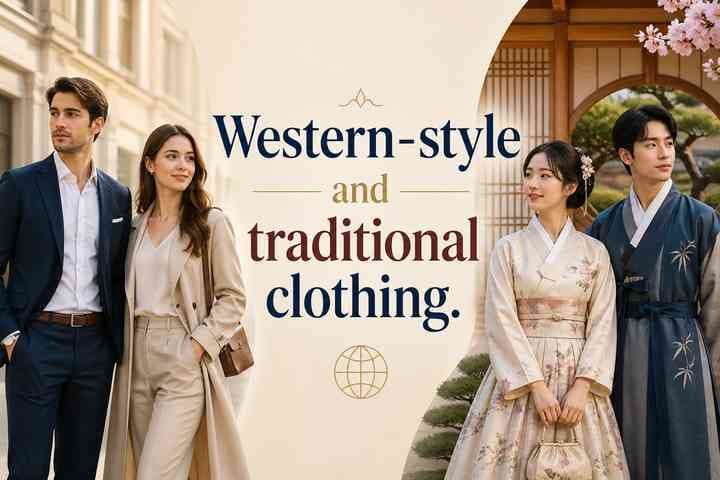
In many countries, people now wear Western-style dresses such as suits and jeans rather than traditional clothing. Why is this? Is this a positive or negative development?
Discuss both these views and give your own opinion.
My Essay
Introduction
In recent years, Western outfits including suits and jeans are becoming popular across countries, with more people preferring them to traditional clothing. This shift is seen as globalization and changes in cultural values. I believe these modern attires may have some advantages in the short-term, but it will raise serious consequences in the long-term development.
Body 1 (Causes)
The growing popularity of Western clothing in many countries can be attributed to media influence and international trend. Some global brands leave effects on young people’s fashion preferences across online media in South East Asian areas. In particular, a high-tech lifestyle makes people more easily accessible with lots of trends on social media which normalizes Western fashion and encourages imitation among younger generations. For instance, Zara, Calvin Klein or Uniqlo always update their new arrival collections and have well-developed strategies to attract a wide range of customers. As a result, young individuals see these styles as not only their casual wears, but also a symbol of modernity and professionalism. This gradually changes daily wearing habits leading to the erosion of traditional clothing.
Body 2 (Negative development)
From my perspective, this phenomenon is a negative development due to a serious negative effect toward the gradual erosion of cultural heritage and national identity. As traditional attires are no longer worn frequently, the cultural values and the historical knowledge associated with them will risk disappearing. For example, Kimono - Japanese national uniform, once a part of daily life, is now mainly worn on special occasions like Spring celebrations. This shift implies not only an assimilation in casual wearing but also an erosion of national customs. Moreover, traditional clothing such as Ao Dai, Kimono, Hanbok offer a valuable heritage over Western styling. They contribute to a community’s cultural identity, raise awareness of preserving indigenous traditions. Furthermore, these authentic clothes are also a form of cultural transmission, attract international tourists who have a passion for multicultural experiences.
Conclusion
In conclusion, variations in cultural dressing such as Western fashion stem from differences in acculturation and personality. Although the widespread development of Western-style clothing can contribute to both practicality and multiculturalism, its long-term effects for national cultural heritage are deeply concerning. Therefore, I firmly believe that traditional fashion represents a national identity and valuable heritage.
Vocabulary
Tradition (n) truyền thống.
Custom (n) phong tục.
Heritage (n) di sản.
Ritual (n) nghi thức.
Civilization (n) nền văn minh.
Norm (n) quy chuẩn, tiêu chuẩn.
Multiculturalism (n) đa văn hóa.
Diversity (n) sự đa dạng.
Indigenous (adj) thuộc bản địa.
Minority/Majority groups (n) nhóm thiểu số/đa số.
Assimilation (n) sự đồng hóa.
Marginalization (n) sự bên lề hóa.
Cultural preservation (n) sự gìn giữ bảo tồn văn hóa.
Cultural transmission (n) truyền tải văn hóa.
Acculturation (n) sự tiếp nhận văn hóa.
Modernization (n) hiện đại hóa.
Globalization (n) toàn cầu hóa.
Media influence (n) ảnh hưởng truyền thông.
Professional requirements (n) yêu cầu công việc.
Social conformity (n) hoà nhập xã hội.
Minimalist (n) chủ nghĩa tối giản.
Accessorize (v) thêm phụ kiện.
National identity (n) bản sắc dân tộc.
Deep-rooted (adj) ăn sâu bám rễ.
Distinctive (adj) đặc biệt.
Unique (adj) độc đáo.
Exotic (adj) ngoại lai.
Authentic (adj) nguyên bản.
Westernization (n) phương Tây hoá.
Attire (n) trang phục.
Garment (n) quần áo.
Traditional costume (n) trang phục truyền thống.
Modern apparel (n) trang phục hiện đại.
Casual wear (n) đồ mặc thường ngày.
Formal wear (n) trang phục lịch sự.
Dress code (n) quy định ăn mặc.
Practicality (n) tính thực tiễn.
Exposure (n) sự tiếp xúc.
Media coverage (n) truyền thông đưa tin.
Peer influence (n) ảnh hưởng đồng trang lứa.
Integration (n) sự hội nhập.
Standardization (n) tiêu chuẩn hoá.
Drawback (n) hạn chế.
Negative consequence (n) hậu quả tiêu cực.
Long-term effect (n) ảnh hưởng lâu dài.
Short-term gain (n) lợi ích ngắn hạn.
Marginal (adj) không đáng kể.
Predominant (adj) có tính ưu thế.
Dominant (adj) có ưu thế, trội, chi phối.
Inevitable (v) không thể tránh khỏi.
Gradual (adj) dần dần.
Decline (n) sự suy giảm.
Undermine (v) làm cho suy yếu.
Foster = Stimulate (v) thúc đẩy, khuyến khích.
Adopt (v) áp dụng.